
Blacksmithing Museum
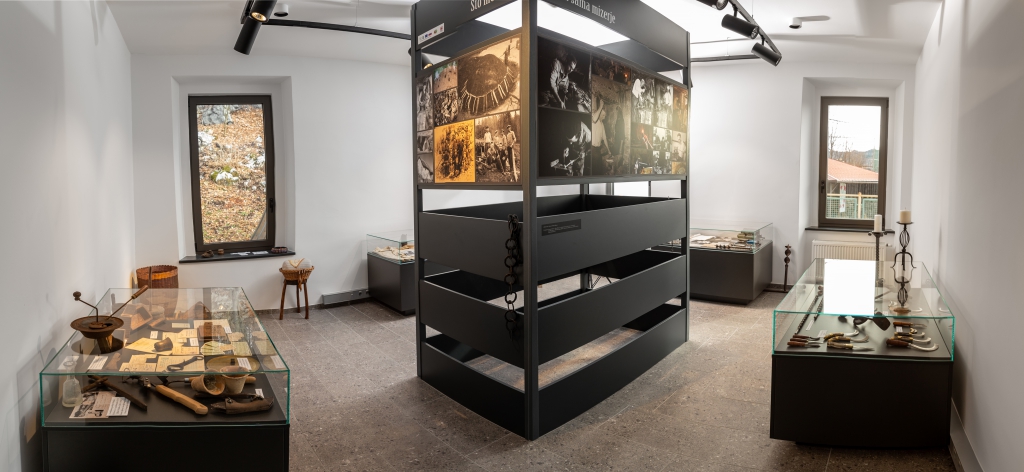
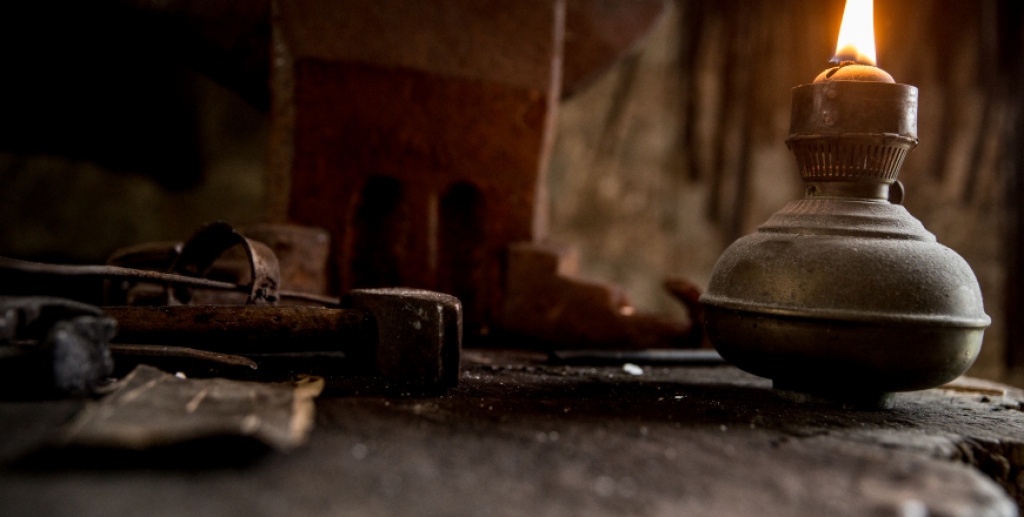
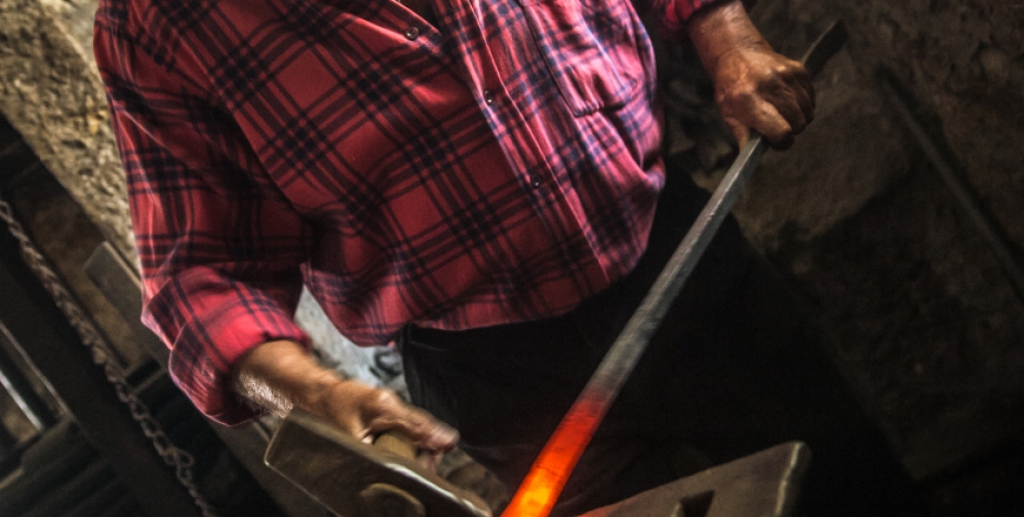
The village’s remoteness from city life and customs has helped ensure that the tradition has been preserved to some extent to this day. In the past, blacksmithing was the craft that most defined the village. Part of this heritage is preserved in the Blacksmithing Museum, which is housed in the parish house in the center of the village.
BLACKSMITHING IN LOKOVEC
The origins of blacksmithing in Lokovec are linked to nail-making, which is believed to have come to this area from Kropa via Gorenja Trebuša and Vojsko. If we refer to Pregl’s work *Tolminci*, which describes the Tolmin Uprising of 1713, we can conclude that this economic sector was already well-established in Lokovec 300 years ago.
The First Cooperative
On the initiative of Janez Klanjšček, then the curate in Lokovec, a blacksmiths’ cooperative was founded on August 25, 1912. This was the first organized form of blacksmithing in Lokovec. It received support from the Central Office for the Promotion of Crafts in Vienna, the Institute for the Promotion of Crafts in Gorizia, and the Gorizia Association of Economic Societies. The cooperative’s primary mission was to promote the local blacksmithing trade, sell products, and supply blacksmiths with raw materials. At that time, a collaboration also began between the First Nail and Ironworks of Kropi and Podnart.
The Period of World War I and the Years That Followed
The turmoil of war also swept through this part of the Banjšice Plateau. In 1917, as many as 140 families were forced to flee, and 317 men were drafted into the military. After the war, this territory became part of Italy. Although blacksmiths had much easier access to raw materials—since they collected iron, various grades of steel, brass sleeves, and various tools right on the front lines, blacksmithing nevertheless declined, as Italy was better supplied with the items produced by the blacksmiths of Lokovec and already had a developed machine-based manufacturing industry.
After World War I, the blacksmiths equipped their forges with tools they found in abandoned Polish forges that had been used by blacksmiths during the war.
FORGING CUTTING TOOLS
The blacksmiths of Lokovec became famous primarily for forging cutting tools. A variety of chisels, knives, axes, adzes, and especially drill bits were sought-after products. Peddlers sold them at all the local fairs, as well as in more distant places and even in Vienna.
During World War II and in the years that followed
Between 1941 and 1943, younger blacksmiths were mobilized into the Italian army or voluntarily chose to join the partisans. After Italy’s surrender, most of the young men from Lokovec were in the partisans. Some blacksmith shops were converted into clandestine armories during this time. They repaired firearms and manufactured explosive devices.
After the war ended, on October 9, 1946, the Lokovec Local People’s Committee established the Blacksmithing Company. The blacksmiths worked from their homes, while the company handled the purchase and sale of their products. They mainly forged nails and drill bits. They were affiliated with the Agricultural Cooperative, which was located in Močile in Čepovan. At its founding, the cooperative had 35 members; by the following year, it already had 63 members from all over Lokovec. Soon, however, 18 members from Gorenji Lokovec broke away and joined the Blacksmithing Section of the Gorenji Lokovec Agricultural Cooperative. The sales network was very underdeveloped, and orders were dwindling. By 1952, only 12 blacksmiths remained members of the cooperative.
NEW PRODUCT LINE
A Time of Prosperity
In 1951, Milko Bremec, a pioneer of the Slovenian blacksmithing industry, arrived in the town. His roots led him to the plateau; his great-grandfather had been from Gorenji Lokovec near Klanfar. He familiarized himself with the work and products of the Lokovec blacksmiths and soon brought them into the then-existing Association of the Blacksmithing and Metalworking Industry of the LRS, later renamed Fužinar. Under the mentorship of Milko Bremec, the cooperative’s situation improved significantly, and in the following years, blacksmithing in Lokovec experienced its greatest boom. The market expanded to cover the entire territory of what was then Yugoslavia, and both product sales and the procurement of raw materials were well organized. Milko Bremec, Eng., developed a new production program focused primarily on the manufacture of various types of drill bits, while nails were removed from the product line. Larger orders and the expansion of production also required new premises. To accommodate the cooperative’s operations, the Municipal People’s Committee ceded the former Vendramin House at Lokovec 83 in 1955, but even this space eventually became too small. Consequently, extensions were added to the building, which blacksmiths constructed over the following years through their own volunteer labor. The building thus took on the appearance of an industrial plant. The cooperative’s membership grew year by year. At the beginning of 1953, there were only 12 members; by the end of the year, there were already 30; in the fall of 1954, around 50; and by 1955, as many as 115.
On July 4, 1978, a new hall at Mokrinov Wall was officially opened. This was an extremely important event, as the town gained not only new jobs but also a water supply system and a paved road.
SCHEDULE: Visits are possible by prior appointment

Technical Heritage Center
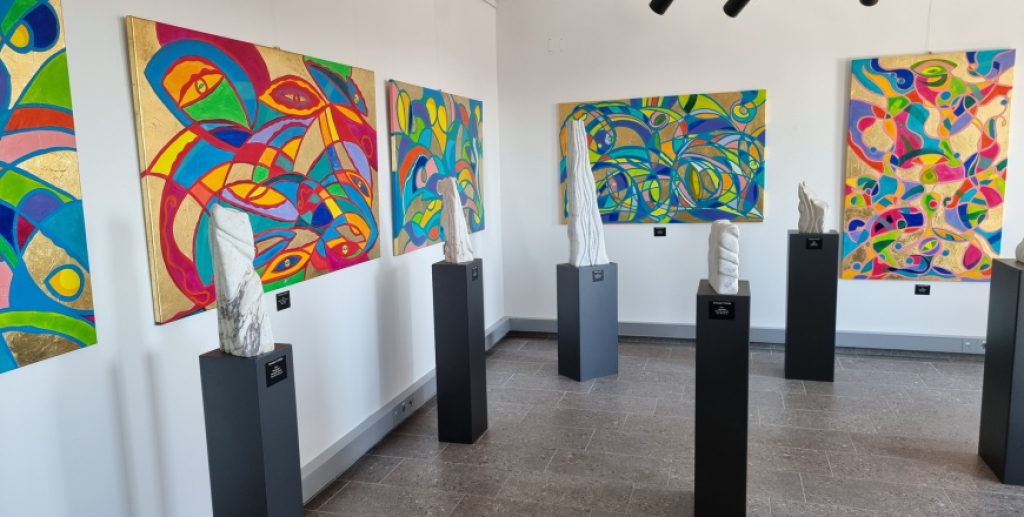
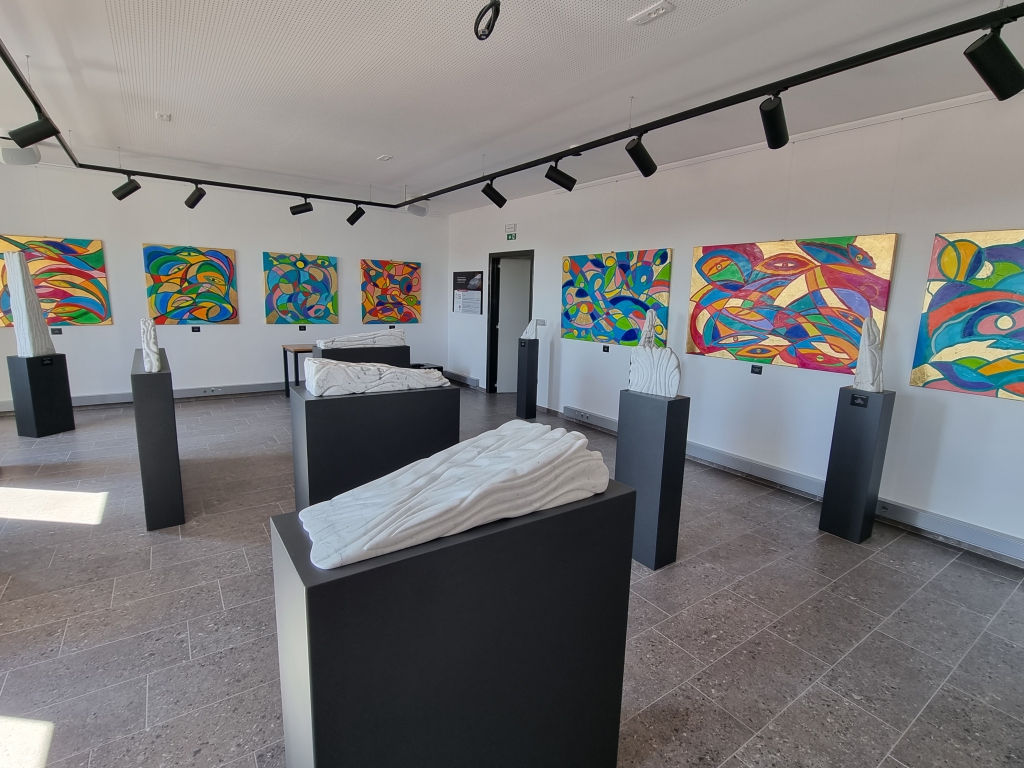
At the Technical Heritage Center, you can view the exhibition “A Hundred Trades and a Single Misery” (a hundred trades and a single poverty) and a gallery featuring temporary exhibitions.
SCHEDULE
Both the Technical Heritage Center and the Blacksmithing Museum are open by appointment.
We offer guided tours for organized groups.